Important message from Dr. Andrea Byrom, Director of the Biological Heritage National Science Challenge who has been provoked into a forthright contribution to the NZ Sciblogs site.
International media outlets are full of gut-wrenching images of burned koalas, video footage of fleeing kangaroos, and firefighters sharing water with wildlife. Judging by the public outpouring of emotion (and donations) in response, intuitively we know something is very, very wrong. We care about biodiversity, and we care a lot. Indeed, we know that people experience grief in relation to biodiversity loss.
Among other points Dr. Byrom raises is this:
I’ve been surprised and disappointed at the scarcity of Indigenous voices in this crisis, at least in mainstream media. As Lorena Allam eloquently points out, Indigenous people in Australia have been connected to the land for tens of thousands of years, and they are watching in anguish as their sacred places go up in smoke. Perhaps Indigenous people can teach us a lot about disaster risk reduction, whether in New Zealand, Australia, or anywhere. That’s not to say that we should revert solely to traditional ways – these fires are unprecedented in their intensity and scale and landscapes are different now – but there is something to be said for listening to the voices of those who have deep connections with the land and its plants and animals, and working respectfully together to come up with contemporary solutions in the apocalyptic world we all find ourselves in.
Now if anyone knows anything about Aussies, they don't lack for confidence. Or they haven't until now. But I do sense a change in how Australia sees itself, both at home and in the world. I think they have lost confidence in themselves, and in their ability to manage their environment.
In the discussion on ecological tipping points we may now be witnessing a tipping point in political action down under.
link to the full blog post.
Showing posts with label indigenous economies. Show all posts
Showing posts with label indigenous economies. Show all posts
Wednesday, January 08, 2020

Wednesday, October 21, 2015
Whakatipu Rawa Mā Ngā Uri Whakatipu
Short video on a research project headed by Dr. Shaun Awatere along with Craig Pauling and Maui Hudson ...
"The challenge for Māori carrying out development is to determine how to balance the drivers of a neo-liberal economic approach with the very ideals and principles that define us as Māori to ensure quality social and environmental outcomes for future generations. Through a previous NPM research project 'Whakatipu rawa mā ngā uri whakatipu' the team has developed a prototype decision-making framework for collective assets, which takes into account well-being indices, tikanga Māori and financial measures."
Whakatipu Rawa Mā Ngā Uri Whakatipu | Media Centre

A real joy working with these rangatira on research vital to the interests of Maori but also wider Aotearoa New Zealand.
"The challenge for Māori carrying out development is to determine how to balance the drivers of a neo-liberal economic approach with the very ideals and principles that define us as Māori to ensure quality social and environmental outcomes for future generations. Through a previous NPM research project 'Whakatipu rawa mā ngā uri whakatipu' the team has developed a prototype decision-making framework for collective assets, which takes into account well-being indices, tikanga Māori and financial measures."
Whakatipu Rawa Mā Ngā Uri Whakatipu | Media Centre
A real joy working with these rangatira on research vital to the interests of Maori but also wider Aotearoa New Zealand.
Sunday, April 12, 2015
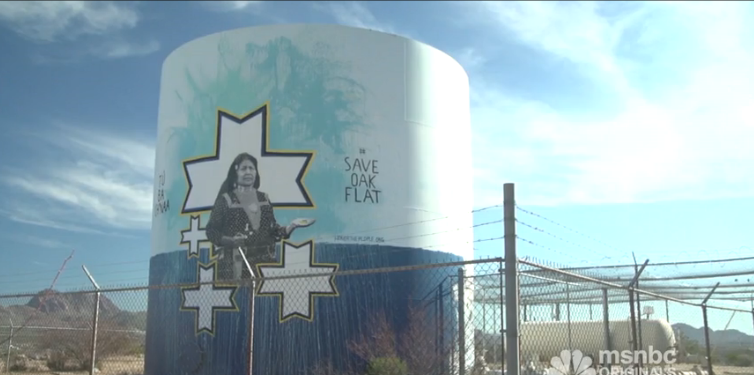
Apache land still being taken...
This from the ether but grounded in land, soil, sacredness and neoliberal theft...
Thursday, April 09, 2015
First Aboriginal protester...
Drawn to this korero of Anthony Fernando, first Aboriginal protester, who took his People's fight to the Mother Country, at one point standing for three years outside Australia House in Britain wearing a coat with wee skeletons pinned to it. Brother got arrested...
A researcher, Fiona Paisley, has found three small notebooks in which Fernando recorded his experiences and impressions.

Fernando got arrested outside the Vatican too, and continued to travel around Europe publicising how Britain took what wasn't her's and brutally suppressed First Australians as part of the ugly Imperial venture...

The notebooks are being digitised. A book by Paisley, 'The Lone Protester', is available through Aboriginal Studies Press.
References: http://nationalunitygovernment.org/content/aboriginal-activist-campaigned-europe-100-years-agohttp://nationalunitygovernment.org/content/aboriginal-activist-campaigned-europe-100-years-ago
 |
| Painting of Fernando in the National Museum of Australia, by Raj Nagi |
A researcher, Fiona Paisley, has found three small notebooks in which Fernando recorded his experiences and impressions.
Fernando got arrested outside the Vatican too, and continued to travel around Europe publicising how Britain took what wasn't her's and brutally suppressed First Australians as part of the ugly Imperial venture...
The notebooks are being digitised. A book by Paisley, 'The Lone Protester', is available through Aboriginal Studies Press.
References: http://nationalunitygovernment.org/content/aboriginal-activist-campaigned-europe-100-years-agohttp://nationalunitygovernment.org/content/aboriginal-activist-campaigned-europe-100-years-ago
Saturday, November 29, 2014
Maori, Maori economy, and Mondragon...
I'm working on a great project led by Dr. Shaun Awatere of LandCare looking at the 'Maoriness of the Maori economy'.
My role is minor, reviewing some of the models of managing collective resources such as those owned and operated by Maori collectives. One example I've always been fascinated by is the Mondragón Cooperative Group in the Basque Country. Mondragón began in the 1950s with the production of small oil stoves. These principles are can be mapped onto a broad Socialist Christian interpretation of how to conduct business, with worker solidarity being coupled to a strong humanitarian charitable ethos.
.jpg)
Needing capital to expand, the group founded their own bank based on the same collective prinicples (based on the teachings of Father José María Arizmendiarrieta Madariaga). More success saw the group splitting into new ventures of inter-related worker-owned businesses.
Now Mondragon is up of nearly 300 businesses, most in the Basque
Country and Navarra, employing over 80,000 people, 70,000 in Spain
with the rest employed all over the world.
Mondragon has been a fascination for researchers
for many years, not least because of its flourishing during a severe economic
recession in Spain and the rest of Europe between 1975 and 1985. While the rest
of the Basque region lost 150,000 jobs, Mondragon added 4,000 jobs.
At its core are a set of values encapsulated by ten principles:
1.
Open Admission
The Mondragon co-operative experience is
open to all men and women who accept these Basic Principles without any type of
discrimination.
2.
Democratic Organisation
The basic equality of worker-members in
terms of their rights to be, possess and know, which implies acceptance of a
democratically organised company based on the sovereignty of the General
Assembly, electing governing bodies and collaborating with managerial bodies.
3.
Sovereignty of labour
Labour is the main factor for transforming
nature, society and human beings themselves. As a result, the systematic
recruitment of salaried workers has been abandoned, full sovereignty is
attached to labour, the wealth created is distributed in terms of the labour
provided and there is a will to extend the job options available to all members
of society.
4.
Instrumental and subordinate nature of
capital
Capital is considered to be an instrument
subordinate to labour, which is necessary for business development. Therefore
it is understood to be worthy of fair and suitable remuneration, which is
limited and not directly linked to the profits obtained, and availability
subordinate to the continuity and development of the co-operative.
5.
Participatory management
The steady development of self-management
and, consequently, of member participation in the area of company management
which, in turn, requires the development of adequate mechanisms for
participation, transparent information, consultation and negotiation, the
application of training plans and internal promotion.
6.
Payment solidarity
Sufficient and fair pay for work as a basic
principle of its management, based on the permanent vocation for sufficient
collective social promotion in accordance with the real possibilities the
co-operative has, and fair on an internal, external and MCC level.
7.
Inter-cooperation
As the specific application of solidarity
and as a requirement for business efficiency, the Principle of
Inter-cooperation should be evident: between individual co-operatives, between
subgroups and between the Mondragón co-operative experience and Basque
co-operative organisations, and co-operative movements in Spain, Europe and the
rest of the world.
8.
Social Transformation
The willingness to ensure fair social
transformation with other peoples by being involved in an expansion process
that helps towards their economic and social reconstruction and with the
construction of a freer, fairer and more caring Basque society.
9.
Universality
Its solidarity with all those who work for
economic democracy in the area of the Social Economy by adopting the objectives
of Peace, Justice and Development which are inherent to the International
Co-operative Movement.
10.
Education
To promote the establishment of the
principles stated above, it is essential to set aside sufficient human and
financial resources for co-operative, professional and youth education.

It's not all beer and skittles for Mondragon. In 2013 one of the most important Mondragon ventures, whiteware manufacturer Fagor (a direct descendent of the original stove business), filed for bankruptcy.
The larger questions posed by the failure of Fagor is the relationship of large-scale economic institutions to the market regardless of the wider economic system, and the lessons this holds for long-term systemic evolution for societies and collectives looking to move beyond the failings of corporate capitalism and traditional socialism.
While Mondragon is having to rationalise its workforce there remains a commitment to reinvest in its workers and communities once the wider economic situation improves. Current economic constraints have seen harsh austerity measures around the world, including Aotearoa.
There are always AlterNatives...
A proud history of struggle and a strong cultural identity has helped the Mondragon collectives survive industrial and economic upheavals from the economic and cultural periphery of a major economic trading bloc. This hybrid approach is not without its failures. But the accumulation of considerable business acumen and market intelligence embeds continually evolving networks while retaining the democratic decision-making the supports consensual principles.
Maori can learn from others. And we can teach.
We're looking at publishing our first reports soon. And Shaun has secured more funding to take it even further!
Watch this space...
Bibliography
Alperovitz, G., & Hanna, T. M. (2013, Nov 1, 2013). Mondragón
and the System Problem. Retrieved October 14, 2014, from http://www.truth-out.org/news/item/19704-mondragon-and-the-system-problem
Flecha, R., & Ngai, P. (2014). The challenge for Mondragon:
Searching for the cooperative values in times of internationalisation. Organization, 21(5), 666-682.
Macleod, G. (1997). From
Mondragon to America: Experiments in Community Economic Development.
Sydney: University of Cape Breton Press.
Mondragon. (2014). Our
Prinicples. Retrieved from http://www.mondragon-corporation.com/eng/co-operative-experience/our-principles/
 |
| Father José María Arizmendiarrieta Madariaga |
Thursday, June 26, 2014
Iwi Development As-It-Is: the Maori economy, capitalism, and democracy
Increasing chatter from the 2011 BERL report which cemented the 30-sumpin' billions we are worth ;) Innovation (and science) drive a lot of this re-positioning of the so-called Maori economy. (My thoughts on this are out there). I think we need to get our facts right too...I was at an international conference where a Maori researcher argued the Maori economy was now 25% of the NZ economy.
'No,' says I, 'surely it's just 5-6%?'
'No,' sez she, 'it's $36 billion...'
'Yes,' sez I, 'from the 2011 Nana report...' which usefully provides a piechart showing Maori contributing 5-6%, which includes self-employed Maori ($5.4 billion) and Maori employers ($20.8b) taken from Stats NZ data. The guts of the 'Maoriness' of this economy is that encompassed by Maori trusts et cetera: $10.6 billion.
Heoi ano. Of course economic activities can - and I would argue, should - be interpreted as all-encompassing, a subset of our mythical and environmental parameters. (Don't panic, Judeo-Christians have thought this way through generations of capitalists...). The back story is that mainstream NZers have been on a nice little earner here in Aotearoa.
Circumstances have changed.
The capitalist mode of production still rests on the fact that the material conditions of production are in the hands of non-workers in the form of property - capital and land - while the masses are only owners of the personal condition of production, their labor power.
Further, the peculiar evolution that is neoliberalism now appears in all its stunted glory. Aotearoa/NZ's strategy seems to be a state of 'not-being': not being Spain, not being Ireland, not being Greece.
But as we stumble into a post-settlement era, Maori have a unique position: increasing numbers of us are capital owners (land and assets), albeit as often (very) small-shareholders, while remaining reliant on selling what labour power we possess to survive.
Awhile ago, after the NZ government had replaced the democratically-elected (regional) Environment Canterbury councillors. Local iwi authority, Te Runanga o Ngai Tahu, support this usurpation. And why wouldn't they? The previous arrangement hardly worked in their favour and now that the government is hell-bent on opening up water for dairying, TRoNT are well-positioned to milk this for all its worth through Ngai Tahu Farms.
Our economy is sexy at the moment, not least as the global capitalist system has squeezed all the low hanging fruit and is looking to drill down - pun intended -and move into the peripheries, literally and philosophically, with Indigenous land and resources now being revisited for ongoing commodification and capitalist economic growth.
Hard rain's gonna fall...
'No,' says I, 'surely it's just 5-6%?'
'No,' sez she, 'it's $36 billion...'
'Yes,' sez I, 'from the 2011 Nana report...' which usefully provides a piechart showing Maori contributing 5-6%, which includes self-employed Maori ($5.4 billion) and Maori employers ($20.8b) taken from Stats NZ data. The guts of the 'Maoriness' of this economy is that encompassed by Maori trusts et cetera: $10.6 billion.
Heoi ano. Of course economic activities can - and I would argue, should - be interpreted as all-encompassing, a subset of our mythical and environmental parameters. (Don't panic, Judeo-Christians have thought this way through generations of capitalists...). The back story is that mainstream NZers have been on a nice little earner here in Aotearoa.
Circumstances have changed.
The capitalist mode of production still rests on the fact that the material conditions of production are in the hands of non-workers in the form of property - capital and land - while the masses are only owners of the personal condition of production, their labor power.
Further, the peculiar evolution that is neoliberalism now appears in all its stunted glory. Aotearoa/NZ's strategy seems to be a state of 'not-being': not being Spain, not being Ireland, not being Greece.
But as we stumble into a post-settlement era, Maori have a unique position: increasing numbers of us are capital owners (land and assets), albeit as often (very) small-shareholders, while remaining reliant on selling what labour power we possess to survive.
Awhile ago, after the NZ government had replaced the democratically-elected (regional) Environment Canterbury councillors. Local iwi authority, Te Runanga o Ngai Tahu, support this usurpation. And why wouldn't they? The previous arrangement hardly worked in their favour and now that the government is hell-bent on opening up water for dairying, TRoNT are well-positioned to milk this for all its worth through Ngai Tahu Farms.
Our economy is sexy at the moment, not least as the global capitalist system has squeezed all the low hanging fruit and is looking to drill down - pun intended -and move into the peripheries, literally and philosophically, with Indigenous land and resources now being revisited for ongoing commodification and capitalist economic growth.
Hard rain's gonna fall...
Thursday, May 01, 2014
Ecuadorian issues
I rarely post or reblog more than a few of all the requests and protests I receive. This has just come through via the IPSG (Indigenous Peoples Specialty Group of the Association of American Geographers).
Brief synposis:
- The Ecuadorian government has recently detained several environmental leaders, and is threating more with the same charges of terrorism.
- They shut down one very well-respected environmental organization earlier this year (Pachamama Foundation) and others know their existence is in danger.
- The lack of transparency, accountability and fair play in the process that is currently happening to (in)validate the 700,000+ signatures collected asking for a general referendum so the Ecuadorian citizens can vote on whether or not to drill for oil in Yasuni is astounding. I have a lot of friends involved in that effort and they have witnessed first-hand how government officials have "disappeared" certain documents which will invalidate thousands of signatures, making the Consulta a no-go, when the legal process to convoke a Consulta has been followed.
- Drilling for oil in Yasuni is an issue of environmental and human rights concern as it is not only one of the most biodiverse places in the world, but there are 2 indigenous groups living in voluntary isolation there - it is their territory.
- Many of my friends have received threatening phone calls from government or military sources.
- Heres is up to the minute info on what´s happening around the Yasuni issue here: https://www.facebook.com/
YASunidos?ref=br_tf.
Friday, December 21, 2012
Tautoko Idle No More
The value of Twitter, or at least the people I follow, is driven home by the Idle No More protests of First Nations fellow travellers in Canada. Their manifesto reads a follows...
We contend that:
Canada has become one of the wealthiest countries in the world by using the land and resources. Canadian mining, logging, oil and fishing companies are the most powerful in the world due to land and resources. Some of the poorest First Nations communities (such as Attawapiskat) have mines or other developments on their land but do not get a share of the profit. The taking of resources has left many lands and waters poisoned – the animals and plants are dying in many areas in Canada. We cannot live without the land and water. We have laws older than this colonial government about how to live with the land.
We contend that:
Currently, this government is trying to pass many laws so that reserve lands can also be bought and sold by big companies to get profit from resources. They are promising to share this time…Why would these promises be different from past promises? We will be left with nothing but poisoned water, land and air. This is an attempt to take away sovereignty and the inherent right to land and resources from First Nations peoples.
We contend that:
There are many examples of other countries moving towards sustainability, and we must demand sustainable development as well. We believe in healthy, just, equitable and sustainable communities and have a vision and plan of how to build them.
Please join us in creating this vision.

We contend that:
The Treaties are nation to nation agreements between First Nations and the Crown who are sovereign nations. The Treaties are agreements that cannot be altered or broken by one side of the two Nations. The spirit and intent of the Treaty agreements meant that First Nations peoples would share the land, but retain their inherent rights to lands and resources. Instead, First Nations have experienced a history of colonization which has resulted in outstanding land claims, lack of resources and unequal funding for services such as education and housing.
The Treaties are nation to nation agreements between First Nations and the Crown who are sovereign nations. The Treaties are agreements that cannot be altered or broken by one side of the two Nations. The spirit and intent of the Treaty agreements meant that First Nations peoples would share the land, but retain their inherent rights to lands and resources. Instead, First Nations have experienced a history of colonization which has resulted in outstanding land claims, lack of resources and unequal funding for services such as education and housing.
We contend that:
Canada has become one of the wealthiest countries in the world by using the land and resources. Canadian mining, logging, oil and fishing companies are the most powerful in the world due to land and resources. Some of the poorest First Nations communities (such as Attawapiskat) have mines or other developments on their land but do not get a share of the profit. The taking of resources has left many lands and waters poisoned – the animals and plants are dying in many areas in Canada. We cannot live without the land and water. We have laws older than this colonial government about how to live with the land.
We contend that:
Currently, this government is trying to pass many laws so that reserve lands can also be bought and sold by big companies to get profit from resources. They are promising to share this time…Why would these promises be different from past promises? We will be left with nothing but poisoned water, land and air. This is an attempt to take away sovereignty and the inherent right to land and resources from First Nations peoples.
We contend that:
There are many examples of other countries moving towards sustainability, and we must demand sustainable development as well. We believe in healthy, just, equitable and sustainable communities and have a vision and plan of how to build them.
Please join us in creating this vision.
I see crazed and crazy posts on the blog, but also reasoned and compassionate replies. In a world of re-indigenising humanity, this marks an important time.
Kia kaha, kia maia, kia manawanui.
Thursday, September 27, 2012
Indigenous Health
Just back from the 5th
Biennial International Network of Indigenous Health Knowledge and Development Conference held on the St Lucia campus of the University of Queensland Brisbane. The conference theme was Building Resilience: Renewing
Individuals, Families and Communities. There was some depressing data presented including some health indicators for Maori that showed increasing rates of rheumatic fever and heart disease and figures showing Aboriginal children are being removed from the families at rates higher than the forced removals from last century.
High turnout from Maori showing we have comparatively secure funding and extensive programmes. I stress comparatively as many Indigenous programmes are under huge pressure as support (by which is meant funds!) are withdrawn as the ongoing financial recession continues to bite.
High turnout from Maori showing we have comparatively secure funding and extensive programmes. I stress comparatively as many Indigenous programmes are under huge pressure as support (by which is meant funds!) are withdrawn as the ongoing financial recession continues to bite.
 |
| Members of Homai Hoatu. Have guitar, will travel... |
Friday, August 17, 2012
Maori Food: promotion of a kai portfolio...
In order to arrest the apparent decline of national and regional economies, novel products are routinely developed for wealthy consumers seeking status-affirming ‘quality’ attributes: ‘Search’ attributes are those generally available to the consumer at the time and point of sale, such as price and presentation. ‘Experience’ attributes are not realised until preparation and consumption, and for food would include taste, moisture, crispness, and so on. ‘Credence’ attributes are those pertaining to environmental health, sustainability, ecological resilience issues and so on. Indigenous ventures, including Maori, now attempt to satisfy these wealthy (generally European or North American) consumers and their values which may include supporting Indigenous ventures, although the resulting niche markets can be very large and difficult to historically impoverished groups to supply.
The latest attempt by Maori to crack this market takes the form of a portfolio of wines, beer, and condiments.

It remains a difficult enterprise, not least because the market is flooded with premium goods from exotic locations, scrambling for attention. At least it is pitched at the right audience, that is those wealthy punters who have most probably seen their personal wealth increase in the past 5 years while the majority of the consumers have put away the wallet for such luxury purchases: kina pate? Paua relish? Like a lot of things in Aotearoa/NZ, such delights are either free or beyond your working class purse!
I do expect to be sampling some of these wares sometime in the near future...


It remains a difficult enterprise, not least because the market is flooded with premium goods from exotic locations, scrambling for attention. At least it is pitched at the right audience, that is those wealthy punters who have most probably seen their personal wealth increase in the past 5 years while the majority of the consumers have put away the wallet for such luxury purchases: kina pate? Paua relish? Like a lot of things in Aotearoa/NZ, such delights are either free or beyond your working class purse!
I do expect to be sampling some of these wares sometime in the near future...

Wednesday, July 04, 2012
Maori economy: insights from the just past Nga Pae conference
So much going on but a potted review offered anyway of last weeks International Indigenous Development Research conference, held at Auckland University.
I was lucky to be in a great session, well chaired by Te Tuhi Robust, that started with an update on Te Awanuiarangi's Te Tupunga Māori - Te Pae Tawhiti, Māori Economic Development Project, a Nga Pae-funded project.
Titled 'Creating clarity in the clouds of definitions of and for Māori Economic Development', Rawinia Kamau and Richard Jefferies defined and framed their approach, drawing out distinctions between Western and Indigenous approaches. Richard offered interesting insight from his board meetings with Aotearoa Fisheries Ltd. and kiwifruit operations. Like any other corporations, these are always pleased to announce their profits, achieved as much by screwing down labour as expansion and investment.
As Richard pointed out, Of course, tribal shareholders have whanau subject to that screwing down...
Richard recalled his time at Matsui, and the insights he had on Japanese thinking that promotes Japan ahead of anywhere and anyone else.
I then threw out a quick presentation on Maori and innovation, critiquing the Flat world approach that assumes, among other things, that geography and culture don't matter.
Then came a fascinating presentation by Dr. Sean Kerins from the Centre for Aboriginal Economic Policy Research, Australian National University. Called 'Building for the bottom-up: Indigenous development initiatives in the southwest Gulf of Carpentaria, Australia.' Working with Waanyi and Garawa peoples, Sean outlined how they had achieved better biodiversity and successful fire management through traditional approaches to country.

I was lucky to be in a great session, well chaired by Te Tuhi Robust, that started with an update on Te Awanuiarangi's Te Tupunga Māori - Te Pae Tawhiti, Māori Economic Development Project, a Nga Pae-funded project.
Titled 'Creating clarity in the clouds of definitions of and for Māori Economic Development', Rawinia Kamau and Richard Jefferies defined and framed their approach, drawing out distinctions between Western and Indigenous approaches. Richard offered interesting insight from his board meetings with Aotearoa Fisheries Ltd. and kiwifruit operations. Like any other corporations, these are always pleased to announce their profits, achieved as much by screwing down labour as expansion and investment.
As Richard pointed out, Of course, tribal shareholders have whanau subject to that screwing down...
Richard recalled his time at Matsui, and the insights he had on Japanese thinking that promotes Japan ahead of anywhere and anyone else.
I then threw out a quick presentation on Maori and innovation, critiquing the Flat world approach that assumes, among other things, that geography and culture don't matter.
Then came a fascinating presentation by Dr. Sean Kerins from the Centre for Aboriginal Economic Policy Research, Australian National University. Called 'Building for the bottom-up: Indigenous development initiatives in the southwest Gulf of Carpentaria, Australia.' Working with Waanyi and Garawa peoples, Sean outlined how they had achieved better biodiversity and successful fire management through traditional approaches to country.

Saturday, May 26, 2012
NAISA 2012
Just arranging tickets to this years Native American and Indigenous Studies Association (NAISA) conference in Mohegan Sun, Uncasville, Connecticut, for June 3-6. The host institutions are University of Massachusetts Boston; Dartmouth College; Harvard University Native American Program (HUNAP); University of Massachusetts Amherst; and Yale.
Looking forward to catching up with old friends. I'm presenting on the Wednesday, 'Indigenous Resilience to urban disaster: Maori and the 2010/11 Christchurch earthquakes', data coming out of our Lincoln projects on how Maori have been affected by the ongoing quakes (big aftershock of 5.49 yesterday).
Essentially, "The response and recovery of Māori to the massive dislocation of the earthquakes in Ōtautahi displays the strength and resilience of Māori cultural values and skills as well as the distressing effects of ongoing Māori economic vulnerability. The institutions of whānau, marae and iwi provided immediate and much needed help to more than just ‘their own’, and the values of whanaungatanga and manaakitanga were manifested in the actions of countless individuals and groups.

I update our earthquake research on a Lincoln webpage, 'Maori Resilience.'
Looking forward to catching up with old friends. I'm presenting on the Wednesday, 'Indigenous Resilience to urban disaster: Maori and the 2010/11 Christchurch earthquakes', data coming out of our Lincoln projects on how Maori have been affected by the ongoing quakes (big aftershock of 5.49 yesterday).
Essentially, "The response and recovery of Māori to the massive dislocation of the earthquakes in Ōtautahi displays the strength and resilience of Māori cultural values and skills as well as the distressing effects of ongoing Māori economic vulnerability. The institutions of whānau, marae and iwi provided immediate and much needed help to more than just ‘their own’, and the values of whanaungatanga and manaakitanga were manifested in the actions of countless individuals and groups.
However, any framing of Māori
resilience as benefiting from generations of poverty – a callous on our
collective lives – risks reifying the status quo of economic vulnerability,
diluting our attention from a key component of resilience to hazards and
disasters, namely asset wealth. Understanding Māori resilience as nuanced,
place-based and culturally ‘attuned’ opens up possibilities for better disaster
preparation and improved post-disaster recoveries than simply judging Māori
response(s) and recovery(ies) according to assumptions of population stability or
resistance to change. But understanding and manipulating the macro-economic
context remains fundamental to improving the resilience of marginalised
communities such as Māori and poses a continuing challenge to our efforts to
reduce our collective vulnerability to what will be recurring events."

Monday, April 23, 2012
Update on Indigenous Mapping controversy in Oaxaca
I posted on this controversy a while ago, and now thanks to Kieren McKenzie, have been sent a link of an interview with Aldo Gonzalez, the Indigenous Rights Officer of Union of Social Organizations of the Sierra Juarez of Oaxaca (UNOSJO).
The geographers' sin in this case seems to be one of omission by not informing Indigenous participants of one of the studies sponsors - Radiance Technologies - a company that specializes in arms development and military intelligence. Resulting and data was also hoovered up by Human Terrain System, a United States Army unit, for their global database that forms an integral part of the US counterinsurgency strategy.
Serious teko comrades.
Anyways, like Kieren says, all maps are liars so best we geographer always tell the truth.
The geographers' sin in this case seems to be one of omission by not informing Indigenous participants of one of the studies sponsors - Radiance Technologies - a company that specializes in arms development and military intelligence. Resulting and data was also hoovered up by Human Terrain System, a United States Army unit, for their global database that forms an integral part of the US counterinsurgency strategy.
Serious teko comrades.
Anyways, like Kieren says, all maps are liars so best we geographer always tell the truth.
Sunday, April 22, 2012
Tactics of the Left
There is a curious disconnect between the contemporary Left in Aotearoa/New Zealand, and even the mainstream of Maori thought and practice. While I'm aware of old socialists in the Alliance Party and a few of the more rad Greens accepting aspects of tino rangatiratanga (though not the cultural harvest of kereru et alia...), the political scene seems to reserve a small space for Maori - Maori Party, Mana, Brown Nats, Brown-reds - we're missing any of cross-fertilisation that promises true reform and an equitable distribution of power and wealth. Anyways, cut and pasted this from a blog called Woodpile report...

Saul Alinsky's Rules for Radicals
Rule 1: Power is not only what you have, but what the enemy thinks you have
Rule 2: Never go outside the experience of your people.
Rule 3: Whenever possible, go outside the experience of the enemy.
Rule 4: Make the enemy live up to its own book of rules.
Rule 5: Ridicule is man's most potent weapon
Rule 6: A good tactic is one your people enjoy.
Rule 7: A tactic that drags on for too long becomes a drag.
Rule 8: Use different tactics and actions and use all events of the period.
Rule 9: The threat is more terrifying than the thing itself.
Rule 10: Maintain a constant pressure upon the opposition.
Rule 11: If you push a negative hard and deep enough, it will break through into its counterside.
Rule 12: The price of a successful attack is a constructive alternative.
Rule 13: Pick the target, freeze it, personalize it, polarize it
Tuesday, April 10, 2012
Maori grower group heads to Tokyo to promote kiwifruit
Maori grower group heads to Tokyo to promote kiwifruit - Business - NZ Herald News
Te Awanui Huka Pak Ltd (Huka Pak) was incorporated way back in 1991 but is now reaching out in a more direct manner to its international buyers. As the largest shareholder in Seeka Industries, the largest post-harvest operator of kiwifruit in the world, Maori landowners make up between 8-10 per cent of the industry.What we're seeing is the explicit linkage between our culture and our business. In the words of CEO Hemi Rolleston:
"We need to demonstrate what's different about us and our culture is part of our difference. They love it - that we can move from the kapa haka stage to the boardroom."
An item on Maori news fills some gaps, and I found the 2004 accounts on TPK's 'Wall of Honour' page:

However, such ventures also speak of the growing gap between corporately connected Maori - business elites and large shareholders - and the economically disconnected such as those resident in Kawerau where
Ministry of Social Development figures show 1324 of the town's residents are working-age beneficiaries: 19% of the population of 6940. The mayor wants to stop beneficiaries moving there, a further constraint upon those who don't exactly have a lot of freedom to start with...
Te Awanui Huka Pak Ltd (Huka Pak) was incorporated way back in 1991 but is now reaching out in a more direct manner to its international buyers. As the largest shareholder in Seeka Industries, the largest post-harvest operator of kiwifruit in the world, Maori landowners make up between 8-10 per cent of the industry.What we're seeing is the explicit linkage between our culture and our business. In the words of CEO Hemi Rolleston:
"We need to demonstrate what's different about us and our culture is part of our difference. They love it - that we can move from the kapa haka stage to the boardroom."
An item on Maori news fills some gaps, and I found the 2004 accounts on TPK's 'Wall of Honour' page:

However, such ventures also speak of the growing gap between corporately connected Maori - business elites and large shareholders - and the economically disconnected such as those resident in Kawerau where
Ministry of Social Development figures show 1324 of the town's residents are working-age beneficiaries: 19% of the population of 6940. The mayor wants to stop beneficiaries moving there, a further constraint upon those who don't exactly have a lot of freedom to start with...
Tuesday, February 07, 2012
Aotearoa/New Zealand as a Steady State Economy?
In these times of almost daily political eocnomic upheaval, it can be difficult to pullback for a grand planetary perspecitve. Maori are still, of course, engaged at many scales (notably now in debate over freshwater). But what a wondrous conundrum: the rigidly banal science that accepts a logically ultimate balance in the face of rampant theoretically and empirically destructive consumption.
 Jack Santa Barbara poses a nice wee question in his 'Fleeing Vesuvius'...'overcoming the Risks of Economic and Environmental Collapse'. JSB's initial position is a simple economic geographic observation: our isolation will lead to energy descent as we are a small market at the far end of the energy supply chain. This makes us vulnerable to reduced supplies and high prices, and therefore one of the easiest customers to cut from the route. A 'market-driven energy decline could be both unexpected and abrupt'.
In many respects, Kenneth Boulding The Economics of the Coming Spaceship Earth is the seminal article in describing this 'closed' system and interpreting the world economy or econosphere as a number of inputs and outputs, most significant being material, energy, and information... "From a material point of view, we see objects passing from the non-economic into the economic set in the process of production, and we similarly see products passing out of the economic set as their value becomes zero." As for the energy system, Boulding notes there is no escape from the 'grim Second Law of Thermodynamics'. The large energy inputs which we have obtained from fossil fuels can only be temporary.


In many respects, Kenneth Boulding The Economics of the Coming Spaceship Earth is the seminal article in describing this 'closed' system and interpreting the world economy or econosphere as a number of inputs and outputs, most significant being material, energy, and information... "From a material point of view, we see objects passing from the non-economic into the economic set in the process of production, and we similarly see products passing out of the economic set as their value becomes zero." As for the energy system, Boulding notes there is no escape from the 'grim Second Law of Thermodynamics'. The large energy inputs which we have obtained from fossil fuels can only be temporary.

The presence of "slack" in a culture 'permits a divergence from established patterns and activity' not merely devoted to reproducing the existing society but to changing it. Boulding's key point is that the closed earth of the future requires economic principles which are somewhat different from those of the open earth of the past. The open economy is like a 'cowboy economy,' the cowboy being "symbolic of the illimitable plains and also associated with reckless, exploitative, romantic, and violent behavior, which is characteristic of open societies." The closed economy of the future could be seen as a 'spaceman' economy, in which the earth has become a "single spaceship, without unlimited reservoirs of anything, either for extraction or for pollution, and in which, therefore, man must find his place in a cyclical ecological system which is capable of continuous reproduction of material form even though it cannot escape having inputs of energy."
So, one planet, many peoples. Here in Aotearoa/NZ we still struggle with two peoples, one Treaty. Bon chance.
Websites
Saturday, January 07, 2012
Maori Economy, news update
The Labour Party announced its new line up at the end of last year, with Shane Jones at No. 7 and taking on the newly established shadow cabinet position of Maori Economic Development. (NB: always funny to see non-Maori, non-Pasifika, non-Asian NZ MPs as 'European', a la Kiwiblog).
Sealord, the joint venture between Aotearoa Fisheries and Japanese company Nissui, netted $20m profit on revenue of $573m during 15 months trading to September. Although slightly up on the previous result, an unchanged dividend of $16m is to be paid out.
Sealord, the joint venture between Aotearoa Fisheries and Japanese company Nissui, netted $20m profit on revenue of $573m during 15 months trading to September. Although slightly up on the previous result, an unchanged dividend of $16m is to be paid out.
Mutton birds will be tested for radioactivity following leaks from the Fukushima nuclear plant in Japan, having fed and shed in the region in April of last year.
This site records the history of the so-called Maori economy that includes an outline of those reports that have contributed to the current model of understanding and interpreting this economy, and therefore the model by which other cultures and their economies (notably, of course, the Treaty partner), including banks, universities, agribusiness, exporters, and importers. We now see a number of strategic decisions by these potential and existing stakeholders. BNZ have appointed a head of Maori business, Pierre Tohe (of Waikato descent), in acknowledgement of this growing sector.

Other banks are also attentive: ANZ appointed David Harrison as head of Maori relationships in March, 2011; Westpac is also expanding its national Maori strategy.
International Indigenous economies snippets...
Jennifer Campeau elected to Saskatchewan Legislature
Sask Party First Nations candidate, Jennifer Campeau, has been elected in Saskatoon Fairview to the Saskatchewan Legislature.

Jennifer has been a regular attendee of the annual Native American and Indigenous Studies Association conference and organised a panel on Indigenous economic development at last years meeting in Sacramento.
Zimbabwe
Zimbabwean Indigenisation and Empowerment minister Saviour Kasukuwere argues 2012 should see people pursue economic empowerment with the understanding it was only when the majority indigenous Zimbabweans own and participate in their national economy that it would grow in a sustainable manner.
He said such growth, pursued within the socio-economic harmony achieved when the majority was guaranteed an equitable share in their national economy, would become more appealing to foreign investors whose investments are best secured by locals with whom they will partner.
Thursday, January 05, 2012
How Indigenous Peoples are changing the economics of the energy and resource sectors...
An interesting debate taking place regarding Canadian First Nations engaging in direct negotiations with large corporations over transmission logistics which provide some insight into how Maori may benefit. Two examples given by Suzanne LeClair are:
Enbridge’s Northern Gateway, where Aboriginal land leverage is now worth 10% of the $5.5 billion project with $1 billion worth of economic benefits to native communities along the route.

Source: Native leaders vow to block Northern Gateway pipeline, The Globe and Mail.

Source: Welcome to Nunavut
Staggering sums, although it is often employment that is dangled as the carrot for Indigenous Peoples. Rio Tinto, Australia, has increased its Indigenous workforce to six per cent, up from 0.5 per cent in 1996. What is the Canadian data?
Found this nice historical piece on Maori and the goldrushes on 'The Prow' dot org, korero from Te Tau Ihu, top of the South Island). Maori employment in agriculture and mining has recovered from a previous decline recorded from 2004-2009:
Māori and non-Māori employment by industry, 2004–2009
.
Māori employment growth has recently been relatively strong in mining and agriculture, although I've yet to find this data decomposed into just mining employment.
Percentage change in employment by ethnicity and industry, June 2008 to June 2010

Source: Dept. of Labour.
Mining is yet to feature in the Maori economy data (see the BERL analysis...currently 0% exposure). However, the Iwi Chairs forum recommended discussion on "the strategic relevance of the exploration of mining within the conservation estate as a direct issue as well as more broadly reflecting a change in policy toward reconciling economic and environmental interests." There are plenty of caveats for Indigenous engagement in mining of course. Two Maori commentators have chipped in with their perspectives.
Mikaere paints a rather tidier picture than actually exists in Aotearoa. The Maori Party is twisting itself into a characteristic knot where it opposes asset sales but if/when they take place (and the senior coalition party is committed to the sale of these assets despite the economics of such a deal being very shonky), they argue iwi corporations should be front of the queue.
Australian initiatives show dedicated resources and a comprehensive strategy of improving Aboriginal employment in what is a very strong sector, albeit one whose history is written in blood with ongoing issues for those communities in which it is embedded. The issues at this point in Aotearoa are primarily environmental and are resonating throughout many Maori communities, particularly along the East Coast, and look set to be a key environmental issue over the next generation for all Aotearoans. Look for a continuation of the classic development (jobs, economic growth, import substitution) versus the environment dichotomy battle lines. Surely this is precisely the context in which an Indigenous philosophy should be able to both broaden and deepen the debate?
Readings:
Aboriginal Peoples and Mining in Canada: Consultation, Participation and Prospects for Change by William Hipwell, Katy Mamen, Viviane Weitzner and Gail Whiteman, (2002).
IMPACT BENEFIT AGREEMENTS BETWEEN ABORIGINAL COMMUNITIES AND MININGCOMPANIES: THEIR USE IN CANADA by Irene Sosa and Karyn Keenan (2001)
Moving mountains: Communities confront mining and globalizatio by GR Evans, J Goodman (2002).
Enbridge’s Northern Gateway, where Aboriginal land leverage is now worth 10% of the $5.5 billion project with $1 billion worth of economic benefits to native communities along the route.
Source: Native leaders vow to block Northern Gateway pipeline, The Globe and Mail.
Nunavut Land Claim and royalties on Arctic resources
The powerful mining sector has spent $2.2 billion in Nunavut since 1999. Nunavut Tunngavik Inc (NTI) will begin collecting 12% royalty on all resources located in its jurisdiction. Estimates are that NTI will collect about:- $219m between 2013 and 2019 from Agnico-Eagle’s mine
- $400 m by 2023 for Areva’s Kiggavik uranium mine (if approved...)
- $256m by 2031 from Newmont Mining
- $1.8 billion in royalties from Arcelor Mittal’ Mary River iron project by 2021.
Source: Welcome to Nunavut
Staggering sums, although it is often employment that is dangled as the carrot for Indigenous Peoples. Rio Tinto, Australia, has increased its Indigenous workforce to six per cent, up from 0.5 per cent in 1996. What is the Canadian data?
Canadian First Nations Employment in Mining
A 1998 survey of 53 operating mines indicated that: 18 mining operations had hired Aboriginal employees in 1997; the total number of Aboriginal employees was 422; the most frequent types of jobs filled by Aboriginal people included labourers, miners, truck drivers/equipment operators, trades and maintenance operators. These figures had increased somewhat from an earlier survey administered in 1991/1992 (IGWG 1998). A 1996 report (IGWG 1996) noted that Aboriginal employment in Canada averages 4.2%, with higher rates in Saskatchewan (5.7%), Manitoba (9.7%) NWT (28.3%) and Yukon (12.5%). (Source: Hipwell et al. 2002).
Found this nice historical piece on Maori and the goldrushes on 'The Prow' dot org, korero from Te Tau Ihu, top of the South Island). Maori employment in agriculture and mining has recovered from a previous decline recorded from 2004-2009:
Māori and non-Māori employment by industry, 2004–2009
.
Māori employment growth has recently been relatively strong in mining and agriculture, although I've yet to find this data decomposed into just mining employment.
Percentage change in employment by ethnicity and industry, June 2008 to June 2010
Source: Dept. of Labour.
Mining is yet to feature in the Maori economy data (see the BERL analysis...currently 0% exposure). However, the Iwi Chairs forum recommended discussion on "the strategic relevance of the exploration of mining within the conservation estate as a direct issue as well as more broadly reflecting a change in policy toward reconciling economic and environmental interests." There are plenty of caveats for Indigenous engagement in mining of course. Two Maori commentators have chipped in with their perspectives.
For Buddy Mikaere "...there are many good reasons for Indigenous People to have equity positions or ownership (whether sole or in partnership) in vital infrastructure such as pipelines or transmission lines." He rightly points out the needed investment diversification outside the normal iwi interests of farming, fishing and forestry and the opportunities for employment and gaining management experience and partnering with utilities in future projects.
Mikaere paints a rather tidier picture than actually exists in Aotearoa. The Maori Party is twisting itself into a characteristic knot where it opposes asset sales but if/when they take place (and the senior coalition party is committed to the sale of these assets despite the economics of such a deal being very shonky), they argue iwi corporations should be front of the queue.
Te Taru White argues "...it is ultimately about relationship and respect and to ignore this, will be very costly in time, energy and money." For Te Taru, "consultation must move from the ground level up and that quasi-tribal organisations and those established and often fed by the Government's hand, cannot be construed as representing communities. They are in conflict and are prone to being attracted by perverse incentives." He further notes the 'convenient short cuts' available to Government and corporates "to get a decision through without having to deal with the 'riff raff' otherwise referred to as communities. Amazing what a swanky environment, rubbing shoulders with the hoi poloi, a nice glass of chardonnay and of course a promise of continued Government handouts ..."
Australian initiatives show dedicated resources and a comprehensive strategy of improving Aboriginal employment in what is a very strong sector, albeit one whose history is written in blood with ongoing issues for those communities in which it is embedded. The issues at this point in Aotearoa are primarily environmental and are resonating throughout many Maori communities, particularly along the East Coast, and look set to be a key environmental issue over the next generation for all Aotearoans. Look for a continuation of the classic development (jobs, economic growth, import substitution) versus the environment dichotomy battle lines. Surely this is precisely the context in which an Indigenous philosophy should be able to both broaden and deepen the debate?
Readings:
Aboriginal Peoples and Mining in Canada: Consultation, Participation and Prospects for Change by William Hipwell, Katy Mamen, Viviane Weitzner and Gail Whiteman, (2002).
IMPACT BENEFIT AGREEMENTS BETWEEN ABORIGINAL COMMUNITIES AND MININGCOMPANIES: THEIR USE IN CANADA by Irene Sosa and Karyn Keenan (2001)
Moving mountains: Communities confront mining and globalizatio by GR Evans, J Goodman (2002).
Subscribe to:
Posts (Atom)
