Followers

Showing posts with label New Zealand environment. Show all posts

Sunday, March 09, 2014

Maori and fracking

What do we make of the power (technology with intent) to rouse Ruaumoko?!

US Geological Survey research connecting fracking with earthquakes.


U.S. Geological Survey confirms: Human activity caused 5.7 quake in Oklahoma (via Raw Story )
The United States Geological Survey (USGS) issued a press release yesterday indicating that the magnitude 5.7 earthquake that struck Prague, Oklahoma in 2011 was unintentionally human-induced. The USGS claims that the magnitude 5.0 earthquake triggered…


Wednesday, January 30, 2013

DCD and the 'Sleeping giant' that is/was the Maori economy

But are the dogs running or sleeping?

Me and dogs.

I don't mind dogs. We got a Dalmatian last year, Lila, lovely dog, killed a massive rat in our lounge once.

And I use to fish the Tutaekuri River which ran a few minutes walk from our whare in Kauri Street, Taradale. Dogs can be kai.
looking upstream of Tutaekuri, towards the Otatara pa .

I expect to see at least two guard dogs in every truck yard I pass, like the yard on the corner of Vickerys and Washbourne Roads, back of Sockburn by the old airbase. One of the dogs there - they used Dobermans, Rottweilers, the occasional Alsatian- was three-legged. Dangerous work, if you can get it.

sunrise through the HotDip galvanising plant
the old burger bunker, a wreck before the quake...


Nice.
In Capitalist korero there is the term running dogs of capitalism...which Wikipedia tells me is a "literal translation into English of the Chinese/Korean communist pejorative zǒu gǒu 走狗, meaning lackey or lapdog, an unprincipled person who helps or flatters other, more powerful and often evil people. It is derived from the eagerness with which a dog will respond when called by its owner, even for mere scraps.


I also know to Let sleeping dogs lie, remember the film? I was somewhat stunned by the synopsis:

 Following the break-up of his marriage caused by his wife's affair with another man named Bullen (Mune), "Smith" (Neill) arranges to live on the Coromandel peninsula on an island owned by a Maori tribe. Meanwhile, political tensions escalate as an oil embargo leaves the country in an energy crisis. Tensions boil over into a civil war and guerrilla activity. However, Smith enjoys his peaceful island life and has little interaction with the rest of society.


Well, we all know what happens to Smith. (Actually, I forgot, so I had to look it up.)

What we don't know is what's happening to the 'Sleeping giant' of NZ Inc that is the Maori Economy?

With so much riding on the dairy sector, it poaka-fisted attempts to control korero on its soil management strategies must. give. one. pause. to. think.

I recall Ingrid Collins, chair of Parae Whangara B5 which took out Te Ahuwhenua, saying we/they had reached the limits of intensification, and they're mainly sheep and beef.

Pity the lowlands.

i think this water is looking for the Heathcote...near Tower Junction...

Without wanting to oversimplify, the reason I'm posting on what was an obscure chemical (albeit one developed on the very campus from which this is posted...) is that Rod Oram touches on the risk to our Maori economy, or at least that chunk still on the land. DairyNZ and Fonterra, through supporting/contracting research on technological solutions to the environmental (and hence social and market contexts), are reaching those limits, both limits to the land, the water, their ecosystems, and to people, the hours they can work, the injuries they can carry.

We've seen the invisible hand reaching to the Pacific all those years ago. Now its is grasping, pummeling, clenching, all too desperate, and all too visible if you know where to look.

I think we are seeing the extremities of the logic of accumulating capital. Maori have seen the land squeezed from our hands, the blood wrung out of us as workers but still. it. goes. on.

So this latest corporate fuck up (and perhaps more in the arrogance of the political arm rather than the technocratic) is merely the latest incarnation of capital's logic. More people are aware, more focused questions can be asked, more scrutiny of the answers is possible.

Ain't the end. Ain't even the beginning of the end. But it might be the end of the beginning.


Sunday, January 27, 2013

DCP, Eco-N, and milk supply chain management...

As scandals go, it'll probably never reach great heights but for lil' ol' Lincoln campus it is a foot on the ladder.

The product - Eco-N - was developed by Lincoln researchers (led by Prof's Hong Di and Keith Cameron) has been withdrawn by Ravensdown after concerns were raised by foreign markets that the compound around which the IP was wrapped - Dicyandiamide (DCP) - was finding its way into the milk supply.

Staff received an email from the VC's office and links to a couple of press releases, one from Ravensdown (part-owner of the rights to Eco-N) and another from MPI. For MPI, the 'crux' of the issue is the lack of internationally set standards for DCD residues in the food chain: "This is because DCD has not been considered to have any impact on food safety."

Perception, of course, is everything in the premium food stakes we're NZ Inc. has staked its claim. The Wall Street Journal asks 'Is New Zealand milk safe to drink?'...


Talk in the LU staff club was around the products up-take by farmers (500 are claimed, only about 5% of the total NZ dairy estate), and efficacy. One wag said it was less effective the further you got from Lincoln campus...Researcher commissioned by Ravensdown, undertaken by Doug Edmeades, found it had 'little effect' on pasture production. And while a 'positive effect on reducing soil nitrates' was found 'but by how much is still is unknown.'

There was talk of 'commercial sensitivity' and dodgy oversight. Fonterra has known for sometime and sat on the knowledge until they floated their wee shareholder scheme. Lincoln also lost out on a major collaborative strategy with Dairy NZ to Auckland. Small country, everyone knows someone.
Oh well.


As a social scientist, and one with a hankering for more Actor-Network Theory ops, this is a great case study. They need some extra arrows...

As an employee of Lincoln University, I see a hit to our credibility that may ripple on for sometime yet.


Tuesday, January 15, 2013

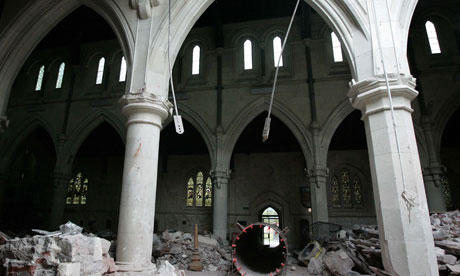
Geo-environmental review on impacts of Christchurch earthquakes...

Dr Amanda Black has reviewed the research on impacts on the environment from the 2010-11 earthquakes.

While our research focuses on the affects of the disaster on Maori communities, Amanda’s report serves as a reminder of the tremendous changes wrought on our landscape with 580,000 tonnes of silt and sand brought to the surface – the liquefaction we all noticed - and substantial damage to infrastructure (above and below ground), ruptured land surfaces and changes in hydrological patterns.

Our urban waterways were inundated with sediment and sewerage (20,000 m3 of sewage per day entering the Heathcote River), resulting in dramatic impacts on water quality and biological communities (i.e. fish, macroinvertebrates, and algae).

Amanda cites research by Lincoln PhD candidate Naomi Wells who found that the hydrological changes and mass sewage discharge had a catastrophic initial impact but 6 months after the February event, and following repairs to the wastewater system, there were no significant differences detected in water chemistry or nutrient (primarily nitrogen) cycling between those severely impacted reaches (Opawa and further east) and minimally impacted sites (west).
Within Christchurch city the Heathcote River/ Ōpawaho study area spanned an impact gradient from minimally affected headwaters in the west through severely affected reaches in the east (minimally, moderately, and severely affected from both sewage and liquefaction zones indicated with shading). The river drains into the Avon-Heathcote Estuary/ Ihutai to the east, where the Bromley Sewage Treatment Plant (STP) is also located.

While the recovery of benthic invertebrate populations has lagged behind that of organisms at lower trophic levels, this is a typical response in the recovery of streams and rivers and demonstrates their reliance on a specific range of water chemistry values and the presence of a food source.


This observation reinforces the importance of having relatively un-impacted areas (i.e., conservation areas) to re-seed ecosystems that are abruptly disturbed by natural disasters.

The report can be read in full through the following link:

A review of the environmental impacts from the Ōtautahi/Canterbury Earthquakes (Dr. Amanda Black)


Thursday, October 25, 2012

Maori views on life, the universe and everything...

Horizon Research recently released a survey - Maori Viewpoint 2012 report - that tracks our views on a range of issues (actually, not that varied a range as it happens...). The survey was done in August and is of 433 adult Maori. (Some of these results are compared with a similar survey from May, 2011).

More of us evidently think Aotearoa/NZ is headed in the wrong direction, 71.8% (compared with 63.1% in May 2011). While consistent across all age groups, concern rises to nearly 80% among rangatahi. Goodbye Gisbourne, G'day Brisbane.

We're also increasingly dissatisfied with the Government’s handling of the economy and more are reporting their household financial positions are worse than a year ago, and more expect them to worsen in the next year. Overall 34.5% of Maori expect household financial positions to crapify.

As for iwi involvement, 5% of Maori are now more involved in iwi affairs than in 2011, though a third are still not active in iwi affairs. 51% have little or no contact with their iwi and 24.6% only rate contact with them by their iwi as adequate or better.

We feel better informed on iwi issues up from 42% in May 2011 to 55%. Nearly 44% of us think our iwi is/are adequately consulting. However, a small majority of 56% feel this consultation is inadequate (it was 72.3% in the previous study). Most of us - 82.3% - want more involvement.
53.7% of Maori say we have received no personal benefit from treaty settlements; 58% feel only a few cousins are benefiting. There has been a 14% fall in the number who feel their iwi are adequately managing their fisheries. Two thirds (64%) feel we have no influence on iwi fisheries policy.
No surprises that 81% of us oppose the Government’s policy to sell shares in state owned energy companies. The party splits are Labour 95%, Mana 100%, Maori party 79% and Green 82.2%. But we're a diverse mob nowadays, so of those who voted National, 67.03% support (14.40% of strongly). There is less certainty over whether Maori own water rights and can attach a value to them: 48.7% say yes, 32% no. The survey was taken in the week the Waitangi Tribunal started hearing an application from the Maori Council and others regarding asset sales and water rights.

Health, unemployment and secondary education are seen as the most important future challenges. Less important are mining and gas and oil exploration; marine and coastal area rights are still viewed as a priority by most Maori.


Tuesday, February 07, 2012

Aotearoa/New Zealand as a Steady State Economy?

In these times of almost daily political eocnomic upheaval, it can be difficult to pullback for a grand planetary perspecitve. Maori are still, of course, engaged at many scales (notably now in debate over freshwater). But what a wondrous conundrum: the rigidly banal science that accepts a logically ultimate balance in the face of rampant theoretically and empirically destructive consumption.
Jack Santa Barbara poses a nice wee question in his 'Fleeing Vesuvius'...'overcoming the Risks of Economic and Environmental Collapse'. JSB's initial position is a simple economic geographic observation: our isolation will lead to energy descent as we are a small market at the far end of the energy supply chain. This makes us vulnerable to reduced supplies and high prices, and therefore one of the easiest customers to cut from the route. A 'market-driven energy decline could be both unexpected and abrupt'.

In many respects, Kenneth Boulding The Economics of the Coming Spaceship Earth is the seminal article in describing this 'closed' system and interpreting the world economy or econosphere as a number of inputs and outputs, most significant being material, energy, and information... "From a material point of view, we see objects passing from the non-economic into the economic set in the process of production, and we similarly see products passing out of the economic set as their value becomes zero." As for the energy system, Boulding notes there is no escape from the 'grim Second Law of Thermodynamics'. The large energy inputs which we have obtained from fossil fuels can only be temporary. 


The presence of "slack" in a culture 'permits a divergence from established patterns and activity' not merely devoted to reproducing the existing society but to changing it. Boulding's key point is that the closed earth of the future requires economic principles which are somewhat different from those of the open earth of the past. The open economy is like a 'cowboy economy,' the cowboy being "symbolic of the illimitable plains and also associated with reckless, exploitative, romantic, and violent behavior, which is characteristic of open societies." The closed economy of the future could be seen as a 'spaceman' economy, in which the earth has become a "single spaceship, without unlimited reservoirs of anything, either for extraction or for pollution, and in which, therefore, man must find his place in a cyclical ecological system which is capable of continuous reproduction of material form even though it cannot escape having inputs of energy."


So, one planet, many peoples. Here in Aotearoa/NZ we still struggle with two peoples, one Treaty. Bon chance.

Websites


Monday, February 06, 2012

Open Letter to New Zealand, from Tariana Turia

Maori Party MP, Tariana Turia, publishes an 'Open Letter' to NZ, reprinted below in full:

Tariana Turia. Photo / Herald on Sunday

"In writing to you, I take my lead from Sir Graham Latimer. Twenty-four years ago, he published a full page advertisement in major newspapers throughout the land. His letter included the English text of Te Tiriti o Waitangi. He wrote to the people, telling them what they had told him - that the Treaty had no meaning, for most New Zealanders it lacked any relevance to their lives.

Sir Graham begged to differ. He did so on the basis of 24 words, encapsulated in section nine of the State-Owned Enterprises Act 1986. "Nothing in this law shall permit the Crown to act in a manner that is inconsistent with the principles of the Treaty of Waitangi."

With those words, a platform was established for Treaty jurisprudence; but more importantly the pathway to nationhood which enables all of us to call New Zealand home.

Out of those words have emerged far-reaching decisions in education, land, te reo Maori, in forestry, in radio, in television. They have, in many respects, defined our nation, ensuring that Maori have the same right as others to the protection of the law; recognising their unique distinctiveness as tangata whenua and as one of two partners to the Treaty. And vitally, it reminds us all of the constitutional significance of Te Tiriti o Waitangi as instructing us how to live together as Treaty partners.

Protecting the special character of our "home" has been at the essence of the action we have taken last week.

I am not one prone to idle threats.

Only one month into the 50th Parliament, the last thing anyone would have wanted would be disruption as is now likely. But to be honest, we never contemplated that the Government would dare to throw into question a legislative clause which many have described as establishing the foundation for a treaty-based nation.
Section nine. One sentence of law that changed, forever, the landscape of the Treaty debate that shapes our nation. Those words provided the basis for placing the Treaty at the heart of our ongoing growth as a nation.
I talk about our concept of home. When we think "treaty" it is so often in familial terms. We refer to Waitangi as the birthplace of the nation; the signing of the Treaty as the birth of this land we know as Aotearoa.

And so it was not surprising to read a description of the key players in the 1987 Lands Case as "parents". Justice Sir David Baragwanath, who as QC led Sian Elias and Martin Dawson for the plaintiffs in New Zealand Maori Council v Attorney-General, has written powerfully about the significance of that case as a turning point in our history. In his contribution to the "In Good Faith" symposium of June 2007, he traced the impeccable lineage of the key players involved some 20 years earlier.
He named several true parents of the Maori Council case: Dame Whina Cooper, the matriarch of the 1975 land march; Matiu Rata, the visionary behind the Waitangi Tribunal; Nganeko Minhinnick, the driving force in the Manukau claim.

We must never forget the heroic courage of Sir Graham Latimer, or as Sir Howard Morrison once said, "the bloke who mortgaged his farm in 1987, with Lady Emily's support, to take on the Crown". The chairman of the Maori Council - and Maori vice-president of the National Party from 1981 to 1992 - Sir Graham has done much to bring the Treaty into focus for us all.

Our home today in Aotearoa owes so much to these people who dared to have the audacity to believe, "in good faith", that the Treaty was worth fighting for.

It has been so disappointing that the advice the Prime Minister received last week did not enable him to see the magnitude of section nine. It was a mistake to suggest that section nine was "largely symbolic" and to extrapolate further that it had not even been used. Frankly, it missed the point.

Numerous commentators have proven otherwise - that section nine led directly to the more empowering provisions of sections 27a-d in the State-Owned Enterprises Act; it had direct bearing on the coal case, the broadcasting assets case that was central to the creation of Maori Television; the New Zealand Maori Council's settlement over the forestry assets. And, as public law specialist Mai Chen said in the Herald recently, it was the starting point of "an incremental but significant constitutional change in New Zealand".
The encouraging advice that nothing should permit the Crown to act in a manner that was inconsistent with the principles of the Treaty of Waitangi provided clarity to the courts; it enabled them, for the first time, to test the actions of the Crown against the principles of the Treaty.

Although the statute stands as an important testimony to the power of the Lands Case, it is the ongoing journey towards nationhood that has kept me awake over this last week.

And so to coin a phrase, I believe that the elegant way forward that is being sought comes back, ironically, to the nub of the debate over section nine.

Over this last week, I have thought back to the legacy of the leadership that brought the lands case to fruition. These were people in our living memory; too many are no longer with us, but their imprint will never die. They had an expectation of us that we will uphold the importance of the Treaty relationship; an expectation that I cannot ignore.

The representations made to Government at that time were hard fought for. We must honour the legacy of those who campaigned to create the constitutional guarantee to Maori that has arisen through interpretation of the Treaty principles.

Any diminution of section nine would be mana-diminishing for the Crown and the people she represents.
There are times when you know that the essence of all you believe in will be undermined by a particular action - and you have to make a stand. This is one of those times. We have no option but to stand strong on this matter; to take other New Zealanders along with us; to have faith in our foundations as a nation.
Section nine is not just a technical provision in law. At its core, it is about people talking together for our common good.

For the fundamental import of section nine was the pathway it provided for the creation of principles which have influenced the courts, settlement legislation and indeed our most intimate and meaningful relationships between Maori and the Crown. Those principles included themes of partnership, protection and participation; they represent the ultimate expression of good faith; of being fair to one another; of acting honourably.

The principles outline a prescription for a relationship which is central to our constitution; an exquisite blueprint for a nation in which kawanatanga and rangatiratanga sit alongside each other. There is a natural tension between these two forces which must be resolved in each case as it occurs. The nation should expect this from time to time.

The Treaty provides a framework for how we might be. And quite simply, that's worth fighting for.

Na, Tariana


Wednesday, November 16, 2011

Oil Shock Horror Probe

Oil Shock Horror Probe

Found this blog (linked off a comment on Interest.co.nz).


Explains why National (through Hekia Parata) is so keen to drill for oil in the Raukumura Basin).

Tuesday, November 01, 2011

Whare tapu, reports, bankers, and CERA


How did it all come to this.

St Paul's Institute, a house of holy research, has in it's infinite splenirtude decided not to publish the results of a survey on a round 500 City of London finance workers, which was due to be revealed 27 October. Forget not that the venerable steps of St Paul's are under siege from protestors of the 'Occupy London Stock Exchange' persuasion.

So a report saying that many bankers are indeed wankers is somehow verboten.

See what combatants in the war offices say herehere, and here. In Dunedin, venerable place that it is, has its own occupation which is perhaps about to be struck down...


Closer to the bone,  actors behind the scenes seek to suppress debate on the fate of the Christchurch Cathedral have moved into the public realm, as things will.


Like the Prime Minister himself sez, we live in dynamic times. In the first televised leaders debate between PM John Key and Leader of the Opposition, Phil Goff. When Goff called the PM a liar for saying (when he was in opposition) he wouldn't increase GST (Goods and Services tax, like VAT, a tax on consumption), the moderator followed up:

Guyon Espiner: "Is it okay for politicians to bend the truth?"
John Key: "Well, we live in a dynamic environment, so of course things change."
 
Of course, we're alright Tiaki...seems Maori are not just enduring troubled times, we're set to thrive and help the rest of the world sustain itself. Unfortunately, commodity prices have taken the (predictable) dive. [Oh, this hits Mozztralia too, remember, the place we can all go when we want to have a job). Current discourse has us brown/cafe au lait Maori, somehow surviving...


"Maori has this middle class that's truly developed. It's well educated and it knows how to grow, make money and look after its own."

Maybe, or rather, I bleeding well hope say. As one of the Maori middle-class, I'm broke without being poor, a morally ambiguous position I'd love to get use to.

How on earth can anyone hope to be honest in such a place, in such a time. Why on Earth be honest.


How and why indeed.

And to prove I maintain my sense of humour, at least with links, cut and paste, and plagiarism:

If Europe were heaven...
The Swiss would be the administrators,
The Italians would be the lovers,
The French would be the cooks,
The British would be the Police,
and The Germans would be the Engineers.
If Europe were Hell...
The Swiss would be the lovers,
The Italians would be the administrators,
The French would be the Engineers,
The British would be the cooks,
and The Germans would be the Police

And go on, check out these maps of Europe. At least scroll to the bottom and check out 'Europe according to Berlusconi'... hang on, save your finger the click...


Thursday, October 13, 2011

Disease affecting Southland kanakana/lamprey


This from MAF: 

MINISTRY OF AGRICULTURE AND FORESTRY
MEDIA RELEASE


Kanakana, or lamprey, in the Mataura River have become affected by a bacterial disease.

The bacteria is no risk to human health, however we advise people not to eat kanakana or other fish that look unusual or unhealthy.

We have provisionally identified the bacteria as Aeromonas salmonicida and are completing full testing to identify the exact strain and understand its significance. This bacteria has not been identified in New Zealand before. Full results are expected by late October.

We are also stepping up monitoring programmes in Southland and working with Environment Southland, commercial fisheries, recreational and customary fishers of kanakana, and recreational water users to find out if other waterways and fish are affected.

Until more information is confirmed, fishers and river users are reminded to be vigilant to check, clean and dry their equipment and clothing between waterways.

To date, there are no signs the bacteria is affecting other species. It is known to affect salmon, trout, eel, and whitebait and could affect native fish such as kokopu.

Kanakana with the bacteria are likely to have:
  • red and/or swollen fins
  • red and/or swollen marks that look like bruises or blood clots.

If anyone finds sick or dead kanakana or any other fish with these symptoms, they can phone the MAF hotline (0800 80 99 66) who will advise what to do next, such as collecting them for testing.


Wednesday, October 12, 2011

The angle of vanishing stability

Lovely term from yet another ship's captain, via the bright box in the corner of the room, pertaining to Aotearoa's worse maritime environmental disaster.

'Tis all quite patterned by now me hearty's...


Listen to the Minister of Defence justifying the MoD's decision to delay its own report until it had digested (cribbed?) the UN report into abuses of Afghani prisoner's captured or otherwise handled by NZ SAS. How thin have we cut the State carcass?

This government's credibility ebbs by the day, and when the end comes, it'll be like any capsize: quick and deadly, sucking down all in its orbit. Over the angle of vanishing stability.

Shame.


Tuesday, October 11, 2011

How did it all come to this....worse Aotearoa/New Zealand maritime environmental disaster

The recent squirming performance of our Prime Minister (in response to contrary accounts of Standard and Poor's recent downgrading of NZ's credit rating), the tortured experiences of many Christchurch residents, the tragic revelations in the Pike River coalmine disaster, and now the fumbling response to the grounded cargo vessel in the Bay of Plenty leaves me feeling somewhat disturbed at the vacuum in leadership in this country.  How did it all come to this?

I can't help but feel we have reached yet another crossroads in our history.

Essentially Aotearoa/NZ is bereft of leadership, infrastructure, and vision, a perfect storm that will hopefully sideline the incompetent, the dishonest, and the corrupt and enable the rise of informed, committed, dynamic and visionary people.

This is also coming through in our research on Ru Whenua, with several informants arguing that the arrival of head office (often from Wellington) lead to a slowing in response efforts. Too many middle and senior managers just don't have the talent or the courage to make a call that others will respect and follow. Our technological and expertise capcity is seriously degraded, with many disaster responses reliant on equipment and experise sourced from offshore leading to frustrating delays in time-sensitive responses.

And our leaders seem to lack the words, the insight, and the commitment to a) solve and b) prevent future recurrences. While the Labour Party must now regret not replacing the misfiring Phil Goff a year ago, we go in to an election with little analysis, poor coverage, and few options.

But I sense a growing disillusion, even anger.

This may yet be an interesting wee election...

Check out:'Worst NZ Maritime environmental disaster'

'Iwi place rahui'

Saturday, November 14, 2009

Put the effing cat back in the effing bag!!

Oops. Who let that Pom into our country?!

The column by Fred Pearce on how 100% Pure NZ might just be a tad over-hyped has created something of a stir. Fred is dead right, of course, we have traded a lot on a pair of falsies ('clean' and 'green'), saved by our small population and the filthy crowdedness of the home towns of our tourist visitors. His article has run on all major newspaper websites, although not all make the most of publishing technology and provide links through to relevant reports. Go to Pearce's original article, the nicely titled 'New Zealand was a friend to Middle Earth but is no friend of the earth', published on the Guardian online, and check out his links.

The response is somewhat predictable, most commentators noting Whale Watch Kaikoura picked up the gold gong for UK Responsible Tourism Awards (e.g., Esther Goh of the NZ Herald with her NZ takes prize for 'shameless two fingers' to world'.

Pearce is right of course, and NZers were the first to point out the disparities in the reality of our environmental performance and the hype. That we're locked into whoring our land to the rich and famous is just an extension of the failed policies of the 1980s. (remember when we were destined by the laws of neoliberalism to become the Switzerland of the South Pacific?! Maybe we misheard and Roger Douglas meant Swaziland...). More importantly for me, Pearce exposes the expanding PR industry around environmental greenwashing - check out the rather interesting UNEP Climate Neutral Network...

Saturday, February 21, 2009

Science and Technology Studies (STS)

At the end of last year I attended the "Towards STS networking in the Asia-Pacific", a two-day meeting at Victoria University of Wellington, 1-2 December 2008.
There were 45 participants from China, Japan, Singapore, the USA, Australia and New Zealand, and a total of 24 papers were presented (including keynote and plenary talks), representing a wide range of STS perspectives and research approaches. The organisers released a report on several concrete outcomes that resulted from this meeting.

1. A special journal issue of selected papers from the workshop will be pursued by the workshop organisers, in the first instance through the newly established East Asian Science Technology and Society Journal.

A call for papers will be set in motion in February 2009, following the themes from the workshop, with the aim of publication in late 2010.

2. A regional STS Network is to be set up, with a convening group. A/Prof Richard Hindmarsh (Griffith University, Brisbane) was invited by workshop participants to be the inaugural Convenor (for 2009), with advisors Dr Karen Cronin and Virginia Baker (ESR, Wellington), and support contacts in China (Dr Ma Huiduan), Japan (A/Prof. Tomiko Yamaguchi), and Singapore (Dr Sulfikar Amir). However, as A/Prof Hindmarsh is also the organiser for the next STS workshop in Brisbane in November 2009, he has passed on the role of Convenor to Karen Cronin but remains on the committee as Deputy Convenor. Karen’s employer (Environmental Science and Research Ltd) is extending its capability in the STS field and has kindly agreed to provide support for the Network e.g. through hosting web pages, contact database.

3. Format for the Network. Rather than creating another professional association, it is envisaged that the Network will be an informal group, aimed at developing collegial relationships in the Asia Pacific region. It would operate primarily though an annual workshop, along with an email contact list and a website. There will be no formal membership, committee structure, or fees. The annual workshop will be self funding through registrations, grants and sponsorship. To share the workload, the Convenor role will be rotated on an annual basis [to December]. The Convenor will co-opt support from among the Network members, including appointing an organising group for the annual workshop.

The Network will be open to those with an interest in STS research, theory and practice in the Asia Pacific region, and it will be complementary to existing formal associations. Many network participants already belong to established national or international STS/HPS associations. The Wellington meeting agreed to investigate the options for a complementary support relationship with a potential regional chapter of 4S, but upon investigation this option is not available.

4. It was agreed to hold the next STS networking workshop in Brisbane, in late November 2009, with Richard Hindmarsh as the organiser. The Centre for Governance and Public Policy at Griffith University, of which Richard is a member, is kindly providing primary funding support. Special features of the Brisbane meeting will be a focus on the environment and on indigenous issues.

5. Network members are also looking forward to meeting again in August 2010 in Japan, at the 4S annual meeting in Tokyo. This will be an opportunity to extend our contacts in the Asia Pacific region and potentially present joint papers or sessions.

6. The Wellington meeting was honoured to have the participation of Professor Chen Fan, Chief Professor at the Innovation Institute of Philosophy and Social Science for STS Northeastern University, China and President of the Chinese STS Society, along with his colleague Dr Ma Huiduan. Prof Fan kindly offered to host a future regional STS networking meeting in China in 2011 or 2012.

7. Website information on the Wellington workshop was hosted on a blog. Following the workshop, the blogsite is being updated with a photo of participants, the programme, keynote and plenary speakers’ details, and the abstracts.

The full workshop presentations and future information for STS networking will be set up soon on a permanent web page, hosted by Environmental Science and Research (ESR) on its STS pages.

Finally, we would like to thank once again all our speakers, and in particular our sponsors: Environmental Science and Research (ESR), the Victoria Management School at Victoria University of Wellington, the Building Research Capacity in the Social Sciences Fund (BRCSS) in New Zealand, and the Centre for Governance and Public Policy, Griffith University in Brisbane.
Simon Lambert

Create Your Badge