Followers

Showing posts with label Maori education. Show all posts

Thursday, April 10, 2025

Following the flight of the wind wanderers


Nifty vid on a Scion (ex-NZ Forest Research Institute) project I'm supporting. Basically, Aotearoa receives potential pests and diseases from offshore by various pathways including 'airbridges', many of which originate from our friends and generally good neighbours, Australia. 

This MBIE funded project explores warning systems to alert us when the aerial arrival of insects and pathogens is more likely. It began in October 2023 and runs through to 2028. Researchers are looking to fill critical knowledge gaps in atmospheric science and aerial invader biology to understand how organisms survive the journey in extreme atmospheric conditions and model techniques for how airbridges connect Aotearoa New Zealand to other landmasses, and how stuff is deposited on our whenua.

"It’s time to learn how we can strengthen our “biosecurity net” to predict when organisms may arrive and which are more welcome than others."


Key partners are Taranaki Mounga who assist in finding locations for monitoring and also supporting the integration of the science into efforts to protect their mounga. Mana whenua are helping with surveillance and identifying how this research can benefit Taranaki iwi.


Friday, January 29, 2016

NZ Agriculture graduate numbers on the downward slope...

Interesting data on the declining trend for NZ graduates in our key sectors with the number of domestic students completing qualifications in agriculture or related sectors between 2009-14 fell by 2000 students.

The data is from the Ministry of Education report What did they do? The field of study of domestic graduates 2011-2014. First graph is trend over time, all students...
 

Second graph, graduates in Ag and related fields by ethnicity...


Heaps of Maori ... I need to crunch this according to level of qual. But not today. That bloody chicken...

Sunday, March 08, 2015

Maori University Entrance dropped off a cliff...

UE pass rates for Maori have dropped from 53% to 36%.

For those who thought having a Maori Minister of Education would help, well, now we know...

Pasifika pass rates are also down, from a shit 47% to a really shit 34%.

NCEA standards were raised last year after concerns on the number of first year uni students dropping out (22% of Maori, 11% of Pakeha). Retention and completion are key indicators of institutional success (and therefore funding).

And while public comments on our Universities are always full of disdain for a tertiary education, I always argue that graduate numbers and diversity are fundamental to economic productivity. A degree also opens the world for our young people, socially, culturally, and - I'd never knock this last reason - economically.

Without tertiary-educated Maori, the so-called Maori economy will continue to be a price-taking commodity export business and the wider NZ economy will continue to flatline.

So, what now?

I'd dump Hekia Parata, pump money into high-school tutoring for our students, and pump more money into university tutoring.

I'd ban salad forks too, but that's just a personal thang...

Thursday, November 08, 2012

Latest Maori unemployment figures dire...

Latest Household Labour Force Survey for the September quarter shows a rise in Aotearoa/NZ's unemployment to 7.3%.

The rise is reported as 'unexpected', a statement which merely highlights the empirical and methodological ignorance of current economics.

For Maori, we're back to the levels last seen in the worst of the GFC (Global Financial Crisis): 15.1%.


Considering how many of us have joined the exodus to Ahitereiria [jobless rate in Oz unchanged at 5.4%], this is a staggeringly bad result. Also, given the general confidence and excitement of this years FOMA conference, this result reinforces the two-speed Maori economy. A select and lucky few are doing very well; the great majority are not, and in fact seem to be in a downward spiral.

Expect the usual platitudes.

Thursday, October 25, 2012

Maori views on life, the universe and everything...

Horizon Research recently released a survey - Maori Viewpoint 2012 report - that tracks our views on a range of issues (actually, not that varied a range as it happens...). The survey was done in August and is of 433 adult Maori. (Some of these results are compared with a similar survey from May, 2011).

More of us evidently think Aotearoa/NZ is headed in the wrong direction, 71.8% (compared with 63.1% in May 2011). While consistent across all age groups, concern rises to nearly 80% among rangatahi. Goodbye Gisbourne, G'day Brisbane.

We're also increasingly dissatisfied with the Government’s handling of the economy and more are reporting their household financial positions are worse than a year ago, and more expect them to worsen in the next year. Overall 34.5% of Maori expect household financial positions to crapify.

As for iwi involvement, 5% of Maori are now more involved in iwi affairs than in 2011, though a third are still not active in iwi affairs. 51% have little or no contact with their iwi and 24.6% only rate contact with them by their iwi as adequate or better.

We feel better informed on iwi issues up from 42% in May 2011 to 55%. Nearly 44% of us think our iwi is/are adequately consulting. However, a small majority of 56% feel this consultation is inadequate (it was 72.3% in the previous study). Most of us - 82.3% - want more involvement.
53.7% of Maori say we have received no personal benefit from treaty settlements; 58% feel only a few cousins are benefiting. There has been a 14% fall in the number who feel their iwi are adequately managing their fisheries. Two thirds (64%) feel we have no influence on iwi fisheries policy.
No surprises that 81% of us oppose the Government’s policy to sell shares in state owned energy companies. The party splits are Labour 95%, Mana 100%, Maori party 79% and Green 82.2%. But we're a diverse mob nowadays, so of those who voted National, 67.03% support (14.40% of strongly). There is less certainty over whether Maori own water rights and can attach a value to them: 48.7% say yes, 32% no. The survey was taken in the week the Waitangi Tribunal started hearing an application from the Maori Council and others regarding asset sales and water rights.

Health, unemployment and secondary education are seen as the most important future challenges. Less important are mining and gas and oil exploration; marine and coastal area rights are still viewed as a priority by most Maori.


Maori and Pasifika squeezing through a narrower window to Victoria University

Victoria University has applied to raise fees in its undergraduate education, social sciences and humanities courses by 8 per cent - twice the maximum permissible under government regulations - and justifies this by saying the revenue would allow the university to better support Maori and Pasifika students.

These courses have the highest proportion of Maori and Pasifika students.

With inflation running at a lower than predicted 0.8%, we continue to see universities seeking to raise fees by 4% across all courses.

As a lecturer I know that many students are really struggling financially and will take on whatever employment they can to minimise their debt. But tertiary study is time-intensive - we expect students to spend an hour or preferably two buried in the texts for every hour they sit in a lecture room but many are working as bar staff or supermarket shelf stackers, hardly conducive to intellectual exertion.

With education still our way out of the mire of poverty and underemployment, anything that narrows the window of opportunity is to be opposed, as Ivy Harper, Lincoln PhD candidate, argues...


Tuesday, September 18, 2012

Christchurch School Mergers and Kura Kaupapa Maori


Rapid explosion of Facebook comments on the proposal to merge the two Kura Kaupapa in Otautahi, and merge and close many of those schools affected by the earthquakes. I know one of those kura has lost just ten pupils - hardly a threat to their operations and they expect to grow their roll through the rebuild, now picking up somewhat.

There is, of course a strong economic rationale for the proposed closures and mergers. [the rationale is that NZ is broke and getting broker ;)]

There's always a strong economic rationale for drastic change in recessionary times.

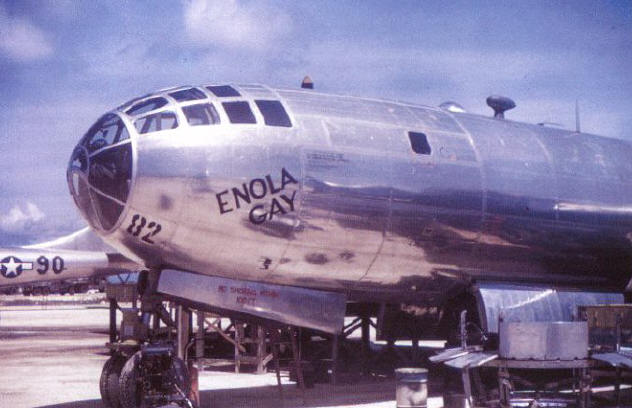
MP for Te Tai Tonga, Rino Tirakatene, has said "You betcha Labour opposes this merger...Sure, Labour realises that there had to be a change in Canterbury post-earthquake, but not like this. Not without proper consultation. Theres a way to deliver bad news! Hekia delivered hers from the Enola Gay ! I'd like to think my Labour colleagues have more of a heart than the Nats."

[Was going to correct the typos but maybe it shows our MP is really busy as opposed to not being able to write right...] [oh and decided not to point out Labour's approach to troublesome natives, arresting due legal process and legislating away our rights: pot, kettle, black ay bra] [oh oh, the Enola Gay was the US Airforce plane from which dropped the first atomic bomb...]

Government consultation processes have always been loaded against Maori; the current government merely compounds this by the scale and breadth of their disdain in what is clearly a process entered to bolster the government's position in any court action (re: assets sales and water rights) and achieve - for the Chch school's proposal - a designated outcome.

[what does it mean when a government coalition member slams government approach to consultation?!]


At the risk of sounding melodramatic, there's something rotten at the heart of this government, and with all due respect to MP Rino, I'm far from convinced that Labour has any more heart than National (I suspect they retain strong proponents of neoliberal economics within their ranks). The Prime Minster's performance in supporting the thoroughly tarnished John Banks is the latest incarnation of a leadership that thinks their wealth is proof positive they're cleverer than the rest of us.

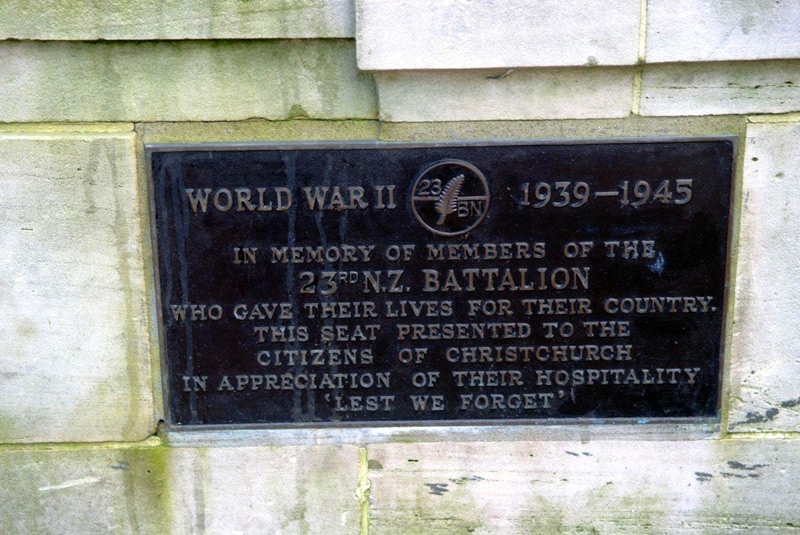
Anyway, taking the kids to tomorrow's protest at the Bridge of Remembrance. The names carved in that stone, while they wouldn't've all supported Maori language schooling, fought for a fairer world.


Thursday, May 10, 2012

Maori GIS

It had to happen sooner or later: Ghost GIS... courtesy of Te Kahui Manu Hokai Conference on GIS Training for the Tauira Kaitiaki Taiao, 2012 (embedding has been disabled but the short link is provided).


Now that I check out the website on which presentations have been posted, I thought it worth a mention as there is some very exciting stuff going on in GIS for Indigenous groups...


Thursday, October 27, 2011

Responsive Pedagogy: engaging restoratively with challenging behaviour


Attended the launch of an edited collection 'Responsive Pedagogies' at the University of Canterbury last Friday. Good turnout, a bit hot and stuff in the library, second floor, no beer and lots of wine. I drifted off after about 10 minutes and browsed the new book shelf, finding 'Planning in ten words: a Lacanian Entanglement with Spatial Planning' that sparked some quick note taking on risk and danger for our Maori Resilience thru the Ru Whenua project at Lincoln University.


The work is by Michael Gunder and Jean Hillier, and it starts with a nice diss of planning as an empty signifier. Decisions - planning - turn dangers into risks. Indeed it is only possible to talk about 'risk' when the occurrence of an event is connected to a decision. This sets up a haunting by the decision not made, by the possibilities rejected: the future is spectral.

Gunder and Hillier recommend the explicit incorporation of uncertainty as a 'core ontological' state of a qualitative, rather than a merely quantitative (and hence supposedly measurable) world. It is this approach that may gel with kaupapa Maori...

Anyways, here's another of my fuzzy mid-range Smart Phone pic of the view from the back.


Thursday, August 11, 2011

Documentary, Maori Television

Kia hiwa ra!

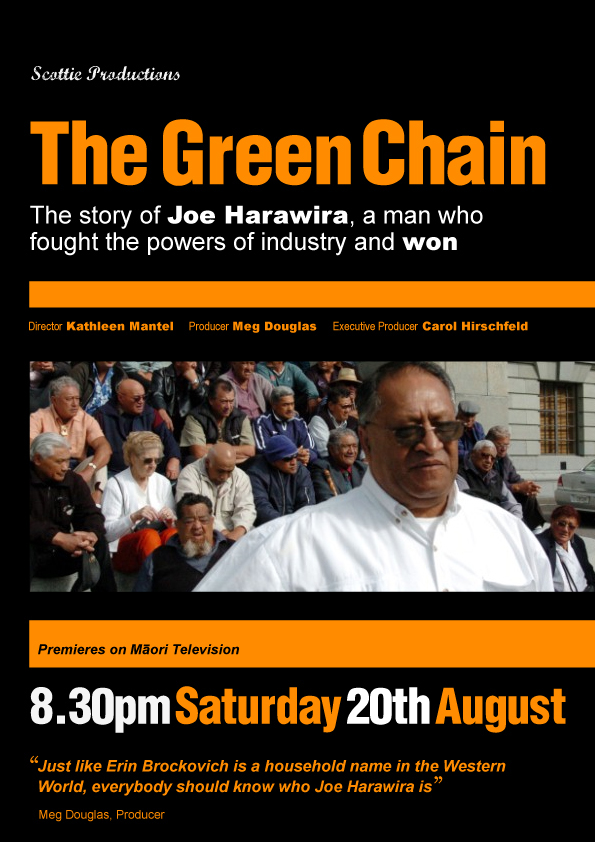
A documentary on the issue of toxins poisoning land and people, as evidenced in the lives of sawmill workers. Joe Harawira has been a stalwart fighter for education and remediation of what is a serious environmental and societal concern in many places in Aotearoa/NZ.

Saturday, July 02, 2011

WAI 262 (finally) released...

Just when you thought it was safe to go into the dark... I suppose it was a matter of time, and I'm wrapped as it gives MAST 603, one of the paper I'm teaching at Lincoln University this year) a fascinating focus. (Just catching the mocking, sneering tone of two Pakeha commentators on t.v.; Fran O'Sullivan just used the term 'brown-mail'. Oh well. I'll 'get over it', when they get hard, get real, and get honest!).

Trouble is, damn thing is so big, and I'm so old school I need hard copy so I can scrawl and circle and throw around ?'s and !'s. We're gonna be a long time digesting this. At first cut it does seem so bloody conciliatory!

Hmmmm, some concerns starting to come through, mars 2 earth

And a pity that Murray Parsons passed away before its release. I've tried to find some web records of the first hui (held in 1988 at Rehua) but have only found an old, 1990, NZ Botanical Society newsletter that refers to it...


Murray Parsons. Botanist, Ngati Kahungunu (ki Wairarapa). Died 10 May 2011, aged just 69.

But the report itself starts with a remarkably positive statement from the Minister of Maori Affairs, expaling the reports name, Ko tenei Aotearoa' can mean "‘This is Aotearoa’ or ‘This is New Zealand’, or both. The ambiguity is intentional: a reminder, if one is needed, that Aotearoa and New Zealand must be able to co-exist in the same space."

Nice.

And then: "New Zealand sits poised at a crossroads both in race relations and on our long quest for a mature sense of national identity. These issues are not just important in themselves; they impact on wider questions of economic growth and social cohesion. We are propelled here by many factors: the enormous progress that has been made toward the settlement of historical Treaty claims and the resulting reincarnation of tribes as serious players in our economic, political, social, and cultural fabric; continuing growth in the Māori population and the seemingly intractable social and economic disparity between that community and the rest of New Zealand; the Māori cultural ‘renaissance’ and the rise of Māori creativity in the arts, music, and literature contrasted with ongoing cultural loss; and the extraordinary increase in wider cultural diversity in New Zealand through immigration over the last 30 years."

And then, stretching the standard metaphor for such things (kia ora Ropata Johnson: "A crossroads in history offers choices. The Wai 262 claimants really asked which of the many possible paths into the future New Zealand should now choose, and in this report we provide an answer based on the principles of the Treaty of Waitangi."


Just an overview then, clipped from the Waitangi website:
Chapter 1 looks at Māori arts and crafts, the works accumulated by our weavers, carvers, writers, musicians, artists, and others, framed by New Zealand’s intellectual property law, particularly copyright and trade marks.

Chapter 2 looks at the genetic and biological resources of 'flora and fauna' - the original moniker of this claim - which Māori have evolved intimate and long-standing relationships, and which are now of intense interest to scientists and researchers involved in bioprospecting, genetic modification, and intellectual property law, particularly patents and plant variety rights.

“Protecting taonga species and mātauranga Māori [Māori traditional knowledge] aids the survival of Māori culture itself. That is why…these things are important enough to justify protection in law.”
Ko Aotearoa Tēnei: Taumata Tuarua, Chapter 2

Chapter 3 RMA stuff.

Chapter 4 DoC stuff.

Chapter 5 focuses on te reo Māori

Chapter 6 considers Crown agencies regarding mātauranga Māori.

Chapter 7 examines rongoā Māori.

Chapter 8 addresses Crown’s policies on including Māori in the development of New Zealand’s position concerning international instruments such as the Convention on Biological Diversity and the Declaration on the Rights of Indigenous Peoples.


Tuesday, January 26, 2010

Will the real Maoris please stand up...


Having seen Avatar with 4 mischievious Tamafreekis, I'm bemused at claims of
Maori reo being a component of the Navi's lingo. Maybe, but again the question is begged: so what?! At least Hana O'regan showed an intelligent magnanimity over this appropriation. Not like Doc Taonui and his media releases on cultural insensitivity and disrespect.

Hmmm...now Maori academics have, of course, based their careers on an 'insider-status' for commentating and utilising Maori concepts and imagery. Doc Taonui is thus only one in a lengthening line of Brown nomenklatura making the most of and reinforcing gradations of Maoriness.

Excellent promotion for Taonui's struggling department, now advertising for not one, not two but five positions! Hey, at least the lucky new employees will have the benefit of a senior Maori academic for mentaling, sorry I meant mentoring...

As an update, love this putdown ...by David Rankin of Nga Puhi pointing out Rawiri's isolation.

Monday, January 12, 2009

Physico-chemical and morphological characteristics of New Zealand Taewa (Maori potato) starches

The most common search terms that are coming up in the blog-counter are to do with Maori potatoes. Here's a paper, rather technical but interesting none-the-less, on the physico-chemical, morphological, thermal, pasting, textural, and retrogradation properties of the starches of Karuparera, Tutaekuri, Huakaroro, Moemoe were studied and compared with starch properties of a modem potato cultivar (Nadine). There are also a lot of searches for kamo kamo (and from around the globe...homesick Maori?!). I chose not to grow an kamo kamo this season, they take up a heck of a lot of space and I've reduced the total size of my vege plot anyway (the boys need more space to run like the wild things they are).

Anyway, I offer these two pictures of succulent kamo kamo.

Sunday, August 19, 2007

MAI Forum

MAI, the Maori and Indigenous Doctoral Support Programme initiated by Nga Pae o Te Maramatanga, has just opened Forum and Chat facilities on its website. Links include articles published in the Online journal (including an article on the 'Diffusion of Sustainable Technologies in Maori Horticulture' that I've previously posted on this blog), as well as advice to postgrads on literature reviews and 'constructing a good argument'.

Tuesday, August 22, 2006

Whakatupua oranga o nga kai-a-Rongo

Change has belatedly come to the 'Matauranga Maori' theme at the National Centre for Advanced Bioprotection Technologies. Nick Roskruge is now supervising a small project on taewa, running three experimental sites to ascertain the agronomic qualities of three varieties, including their pathogens.

A second project has seen Te Ari Prendergast employed to continue the Indigenous Knowledge and agri-development project. Te Ari has the benefit of Dr. Shaun Ogilve's supervision and it is hoped they can resurrect the tarnished reputation of Lincoln and its so-called committment to Matauranga Maori. I've commented and presented on the farce that was Theme 4 at the NCABT, a research centre I was affiliated to (until being 'removed'...).
Simon Lambert

Create Your Badge