
Amongst the recent debates here in NZ we see the merest hint of the ‘paradox of ethical poverty’ through the simmering engagement of Maori complicity in mining. (By the paradox of ethical poverty I mean the romanticised racism of poor Natives somehow being happy Natives, in their natural state, at one with nature et cetera, et cetera). As I noted in one of those regular rants on Facebook, we are complicit in the operations of the mining sector. Take your average mobile phone for instance. In an article on the Congo mining sector, John Prendergast and Sasha Lezhnev highlight the supply chain of the 3Ts - tin, tantalum, and tungsten – important minerals in the ever burgeoning mobile phone and personal computer market. In perhaps the most shocking example, the Congo mines are manned by underpaid workers, including children, and the issues are the same as those raised by the morality of so-called blood or conflict diamonds.
 15 year-old Congo boy mining. (He started aged 8.)
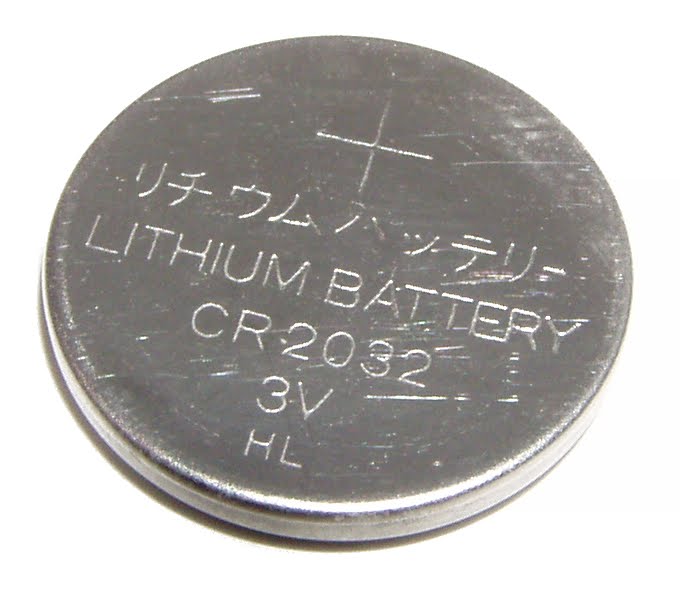
My point is that mining is integral to the contemporary economy. Your bog-standard computer contains aluminum, antimony, arsenic, barium, beryllium, cadmium, chromium, cobalt, copper, gallium, gold, iron, lead, manganese, mercury, palladium, platinum, selenium, silver, and zinc. Stuff which ain't growing on trees. (Which is not to say that heavy metals can't be harvested... check out Dr. Amanda Blacks just completed thesis on bioavailability). Advances in energy technologies will require a range of minerals, often sourced from the rural areas of developing countries. Electric cars with lithium batteries? Step up Bolivia. Of course Australia has mined all over aboriginal land, and serious concerns exist for other areas.
The justification of mining Schedule 4 land in Aotearoa/NZ is that we're basically broke as a nation and have to draw more on our natural resources to catch up to Australia, hardly the best performing OECD economy, given its perverse reliance on mining), but the point is taken: the poorer we are (relative to those we compare ourselves to), the fewer our collective options.
What then for Maori? After all, are we not poorer than Pakeha as a group? Do we not also own (or are about to own) large tracts of land which, as was mentioned last year when the audit of DoC land was announced, just may hold considerable mineral wealth? Its certainly on the table in the Coromandel, where Ngati Rehua have already fingered the government for bad faith bargaining.
This debate sits alongside the wider debate on ownership and utilisation of Aotearoa/NZ resources. We're upset at Chinese ownership? Well, so are others. China is the single biggest investor in Africa, and the role of China, Taiwan and Japan as aid donors is challenging NZ's 'backyard' for influence. I do not necessarily oppose this role - god knows we've treated our Pacific neighbours like shit - but the Chinese buy votes for their purposes, which may not match sustainable Pacific futures, and may not match ours...

Yet again we are faced with a debate on what we find acceptable in our way forward. (Perhaps that is the wrong analogy, too spatial. We're 'onward' in the temporal sense....time passing regardless of our physical location). And NZ as a society hasn't been especially good at that since, well, not in my adult life. First let's get some numbers together - quantities help establish qualities - then lets put out some more maps, this time including transport links, processing facilities and so on. Then lets get some talking heads in the media and start thrashing it out. They lead the debate n the RSA's, working mens' clubs, hairdressers, and bus shelters. It started with a hiss and a roar but has since faded away (okay, perhaps drowned by all the other issues, not least being Canterbury water...on which let me mihi to my old friend Dave 'Sudsy' Sutherland who spoke with real emotion over the future of this province and its water). Are we destined set camp at the crossroads, talking with the devil about what we can trade for our pleasure?

Other reading:
Here's the oroginal government discussion paper: 'Maximising our Mineral Potential:
Stocktake of Schedule 4 of the Crown Minerals Act and beyond'.
Howlett, Catherine. "Flogging a Dead Horse? Neo Marxism and Indigenous Mining Negotiations" Paper presented at the annual meeting of the American Political Science Association, Marriott Wardman Park, Omni Shoreham, Washington Hilton, Washington, DC, Sep 01, 2005
History of Mining in the Pacific, by Dr. Allen L. Clark, Senior Fellow, East-West Center, Honolulu, Hawaii.
Dr. Katerina Teawi, a visiting scholar at the MacMillan Brown Pacific Studies department a few years back, explored some fascinating issues with the extraction of phosphate on Banaba in her research 'Our sea of phosphate: The diaspora of Ocean Island'.
Check out this 'Mining Information Kit for Aboriginal Communities'


